Which LLM API is the best value right now?
As of June 15, 2026, there is no single cheapest or best LLM API for every workload. OpenAI is strong for balanced reasoning and developer tooling, Claude stays premium for higher-stakes reasoning, Gemini is unusually flexible because it offers standard, batch, flex, and priority tiers, and Mistral is often the lowest-cost option for teams that want simpler economics.
If you need a short answer first, choose OpenAI when you want a strong default for production apps and tool use, choose Claude when answer quality matters more than raw cost, choose Gemini when you want cost controls plus large-context workflows, and choose Mistral when price efficiency matters most.
This guide is updated on June 15, 2026 and uses official pricing pages and docs only.
How to read LLM API pricing without getting misled
Most teams underestimate cost because they look only at headline input pricing. In practice, you need to compare four things: input tokens, output tokens, cached input or prompt caching, and whether batch processing is available at a discount.
| Cost factor | Why it matters | What to check |
|---|---|---|
| Input tokens | You pay every time you send prompts, instructions, context, or retrieved documents. | Look at the per-1M token rate and whether long prompts have a higher tier. |
| Output tokens | Verbose answers and long drafts raise bills quickly. | Compare output price, not just input price. |
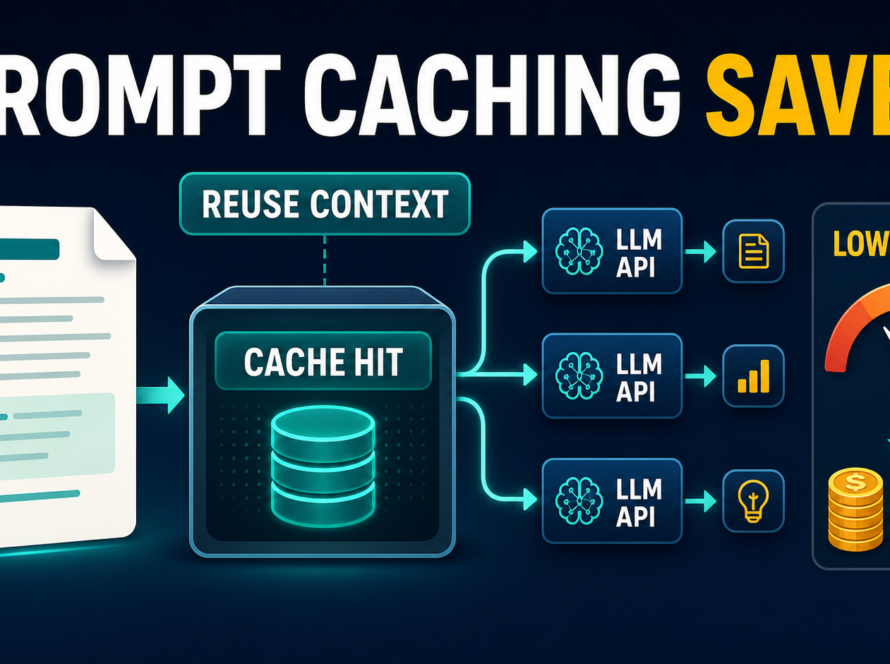
| Caching | Repeated system prompts and shared context can be much cheaper if cached. | Check cached input pricing or prompt cache read/write pricing. |
| Batch or async discounts | Offline summarization, labeling, and content generation can be half price. | Look for official batch discounts before routing all traffic to live endpoints. |
If your app resends large prompts, knowledge chunks, or tool schemas, cache pricing can matter almost as much as model pricing.
Official LLM API pricing snapshot on June 15, 2026
The table below focuses on representative production models that many builders will actually compare.
| Provider | Model | Input | Output | Cache | Useful note |
|---|---|---|---|---|---|
| OpenAI | GPT-5.4 | $2.50 / 1M | $15.00 / 1M | $0.25 cached input / 1M | Balanced flagship for coding and professional work. |
| OpenAI | GPT-5.4 mini | $0.75 / 1M | $4.50 / 1M | $0.075 cached input / 1M | Good default when you need lower cost with strong tooling support. |
| Claude | Sonnet 4.6 | $3 / 1M | $15 / 1M | $3.75 write, $0.30 read / 1M | Strong balance of intelligence, cost, and speed. |
| Claude | Haiku 4.5 | $1 / 1M | $5 / 1M | $1.25 write, $0.10 read / 1M | Lowest-cost current Claude option in the official table. |
| Gemini | Gemini 2.5 Pro | $1.25 / 1M up to 200k prompt tokens | $10 / 1M up to 200k prompt tokens | $0.125 / 1M cached input | Prompts above 200k tokens are priced higher. |
| Gemini | Gemini 2.5 Flash | $0.30 / 1M text-image-video | $2.50 / 1M | $0.03 / 1M cached input | Very competitive for fast interactive apps. |
| Gemini | Gemini 2.5 Flash-Lite | $0.10 / 1M text-image-video | $0.40 / 1M | $0.01 / 1M cached input | Best fit for large-scale classification and lightweight chat. |
| Mistral | Mistral Medium 3.5 | $1.5 / 1M | $7.5 / 1M | Cached tokens billed at 10% of input price | Open-weight flagship with reasoning and coding positioning. |
| Mistral | Mistral Large 3 | $0.5 / 1M | $1.5 / 1M | Cached tokens billed at 10% of input price | Very aggressive price for a general-purpose model. |
| Mistral | Mistral Small 4 | $0.1 / 1M | $0.3 / 1M | Cached tokens billed at 10% of input price | One of the cheapest options in this comparison. |
Two details matter here. First, OpenAI and Claude are not cheap on output tokens when you want premium reasoning. Second, Gemini and Mistral offer lower-cost routing options that can dramatically reduce blended cost.
Which provider is cheapest for common use cases?
The cheapest provider depends on the task. For lightweight chat, classification, and first-pass drafting, Gemini 2.5 Flash-Lite and Mistral Small 4 stand out. For mid-tier production quality, OpenAI GPT-5.4 mini, Gemini 2.5 Flash, and Mistral Large 3 are easier to justify. For premium reasoning, OpenAI GPT-5.4, Claude Sonnet 4.6, and Gemini 2.5 Pro are the practical comparison set.
For chatbots and customer support
If your chatbot handles short questions, FAQ answers, and support triage, output cost usually dominates because the app runs continuously. Gemini 2.5 Flash and Flash-Lite look especially attractive here, while Mistral Small 4 is a strong option for teams that want low-cost text processing. OpenAI GPT-5.4 mini is a safer choice if you care more about platform maturity than minimum price.
For RAG and document-heavy workflows
Retrieval-augmented generation creates recurring prompt overhead because every request resends instructions plus retrieved context. That makes caching crucial. OpenAI’s cached input pricing is explicit, Gemini 2.5 Pro and Flash both expose context caching prices, Claude separates prompt caching into write and read pricing, and Mistral states that cached tokens are billed at 10% of the standard input price.
For RAG, the best value often comes from a two-layer setup: use a cheap model for query rewriting or classification, then call a stronger model only for the final answer.
For agentic workflows and coding
For coding, tool calling, and long-running workflows, the cheapest sticker price is not always the best deal. Rework, retries, and weak tool decisions can erase savings. OpenAI GPT-5.4 mini, Claude Sonnet 4.6, Gemini 2.5 Pro, and Mistral Medium 3.5 all belong in this category.
Batch, flex, and priority pricing can change the decision
The most overlooked part of current pricing is routing flexibility.
- OpenAI states that Batch API saves 50% on inputs and outputs.
- Anthropic states that batch processing saves 50%.
- Google Gemini offers Standard, Batch, Flex, and Priority pricing on multiple models.
- Mistral states that batch processing gets a 50% discount.
This matters because many SEO, content, research, and data-labeling jobs do not need instant responses. If you are generating outlines, summaries, product tags, ad variants, or internal data transforms, batch pricing can cut your bill in half.
Workflow tip for marketers and creators
Run slow jobs in batch and reserve live endpoints for interactive tasks. For example, generate 500 product descriptions overnight with batch pricing, then use a live model only for the final editor-facing refinement step.
How to choose between OpenAI, Claude, Gemini, and Mistral
Decide whether every request truly deserves your best model. Most stacks save money by routing smaller tasks to cheaper models first.
A practical decision framework
| If you need… | Start with… | Why |
|---|---|---|
| Reliable default for production apps | OpenAI GPT-5.4 mini | Strong balance of cost, output quality, and platform maturity. |
| Top-tier reasoning for premium workflows | Claude Sonnet 4.6 or OpenAI GPT-5.4 | Higher cost, but easier to justify for complex tasks. |
| Large-scale low-cost chat or classification | Gemini 2.5 Flash-Lite or Mistral Small 4 | Very low token pricing for volume workloads. |
| Large context plus tiered pricing options | Gemini 2.5 Pro or Flash | Flexible standard, batch, flex, and priority choices. |
| Open-weight-friendly production strategy | Mistral Medium 3.5 or Large 3 | Aggressive pricing and a more open model posture. |
What I would recommend by budget tier
- Lean startup budget: Gemini 2.5 Flash-Lite or Mistral Small 4 for routing, classification, and cheap first drafts.
- Balanced production budget: OpenAI GPT-5.4 mini or Gemini 2.5 Flash as the default app model.
- High-stakes quality budget: Claude Sonnet 4.6, OpenAI GPT-5.4, or Gemini 2.5 Pro for harder reasoning and premium user-facing outputs.
How to reduce LLM API cost without hurting output quality
Most teams should optimize architecture before they negotiate rates.
Cost control checklist
- Use a smaller routing model before calling a premium reasoning model.
- Cache repeated system prompts, policy blocks, and long context prefixes.
- Truncate retrieval results instead of dumping every document chunk into the prompt.
- Move offline generation, summarization, labeling, and enrichment into batch jobs.
- Cap output length when you do not need long-form responses.
- Measure blended cost per successful task, not cost per token in isolation.
Prompt tip
When you want concise business answers, tell the model exactly how many bullets, paragraphs, or fields it should return.
System: Answer in 5 bullets maximum.
User: Compare this week's LLM API pricing for a 10,000-user support bot.
Return: recommended model, fallback model, biggest cost risk, caching plan, batch opportunities.
Pros and cons of each provider
| Provider | Pros | Cons |
|---|---|---|
| OpenAI | Strong platform maturity, explicit cached input pricing, broad developer adoption. | Premium output pricing can add up quickly. |
| Claude | Strong reasoning reputation, clear enterprise-oriented positioning, prompt caching support. | Top-end pricing remains expensive versus Gemini and Mistral. |
| Gemini | Flexible pricing tiers, very low-cost Flash and Flash-Lite options, large-context strengths. | Pricing structure is more complex and can vary by tier and prompt size. |
| Mistral | Aggressive pricing, batch discount, cached tokens at 10% of input price. | Some teams may still prefer larger-platform ecosystems and tooling maturity elsewhere. |
Edit AI videos here
If your AI workflow ends in short-form content, you still need a simple place to turn scripts, voice, and visuals into publishable assets. Edit AI videos here: https://ai.alphatechnologies.vn.
Conclusion
The best LLM API on June 15, 2026 depends less on brand loyalty and more on workload design. OpenAI is still a strong default for production apps, Claude is best when you want premium reasoning and can afford it, Gemini offers some of the most flexible price-performance choices in the market, and Mistral is extremely competitive when low cost matters.
If you are building seriously, do not ask which one model should do everything. Ask which model should handle each stage of the workflow. Explore more AI tools on Aikolhub to build a stack that saves money without lowering output quality.
FAQ
Which LLM API is cheapest right now?
For lightweight text workloads in this comparison, Gemini 2.5 Flash-Lite and Mistral Small 4 are among the cheapest officially listed options.
Is Claude more expensive than OpenAI?
Often yes at the premium tier, especially when you compare Sonnet-style usage against lower-cost OpenAI or Gemini routing options.
Why does cache pricing matter so much?
Because many apps resend the same system prompts, policies, schemas, and retrieved context on every request, and caching reduces the cost of those repeated tokens.
Should I always choose the highest-quality model?
No. The most cost-effective setup usually uses a smaller model for routing, filtering, or drafting and a stronger model only for final reasoning or sensitive outputs.
Is batch processing worth using?
Yes, if your workload is asynchronous. Official vendor pricing pages show major discounts for batch processing, often around 50%.